
Inside FIFA World Cup: A 96-Year Global Journey
The FIFA World Cup is football’s premier international tournament, organized by FIFA for national teams across six confederations and followed by supporters worldwide. The competition began in Uruguay...
Inside FIFA World Cup: A 96-Year Global Journey
The FIFA World Cup is football’s premier international tournament, organized by FIFA for national teams across six confederations and followed by supporters worldwide. The competition began in Uruguay in 1930, returns in 2026 across Canada, Mexico, and the United States, and expands to 48 teams for the first time. Brazil remains the record holder with five titles, while Germany and Italy have won four each, and Argentina entered 2026 as the reigning champion after defeating France in the 2022 final. The 2026 tournament will feature 104 matches, including a new round of 32, rather than the 64-match format used from 1998 through 2022. Football Insights tracks team tactics, player statistics, predictions, and tournament developments, but forecasts are never guarantees. Start by checking official fixtures, squad news, and verified competition rules before considering any match opinion.

Photo by El gringo photo on Pexels
Want a carefully checked starting point for the next tournament?
If you want the World Cup timeline: map the tournament’s evolution
The FIFA World Cup began in Uruguay in 1930, expanded gradually, and will reach a 48-team format in 2026. FIFA suspended the competition during World War II, while Brazil, Germany, Italy, Argentina, France, Spain, England, and Uruguay became champions across different eras. The official FIFA World Cup history records winners, match results, venues, and tournament milestones.
The early competition looked very different from the modern event. Uruguay won the inaugural tournament, Italy claimed the 1934 and 1938 editions, and Brazil established its historic reputation with victories in 1958, 1962, 1970, 1994, and 2002. Germany’s four titles span West Germany’s 1954, 1974, and 1990 triumphs plus Germany’s 2014 win, while Italy’s four include 1934, 1938, 1982, and 2006.
A detail that is easy to miss is the tournament’s interrupted rhythm: there was no World Cup in 1942 or 1946. Another is the changing tactical environment. Defensive organization, substitutions, sports science, video analysis, and goalkeeper distribution have all altered how teams manage 90 minutes. “The FIFA World Cup is the most prestigious football tournament in the world,” according to FIFA’s own description, but its meaning is also shaped by these technical changes.
- 1930: Uruguay hosts and wins the first tournament.
- 1958: Brazil wins with a teenage Pelé in Sweden.
- 1970: Brazil captures its third title.
- 2010: Spain wins its first World Cup.
- 2022: Argentina defeats France in Qatar.
- 2026: Canada, Mexico, and the United States host an expanded edition.
For a more detailed statistical route, see our [Internal Link: World Cup winners and finals guide].
If you are preparing for 2026: study the new competition structure
The 2026 FIFA World Cup will include 48 teams divided into 12 groups of four, with the top two teams in each group and the eight best third-placed teams advancing to the round of 32. The tournament will be hosted by Canada, Mexico, and the United States, and the 104-match schedule creates more data, travel variables, and squad-management questions than previous editions.
This format changes how supporters should read tables. Under the 32-team system, a single draw could heavily influence qualification; in 2026, third-place comparisons add another layer. Goal difference, goals scored, disciplinary records, and formal ranking procedures may become decisive, so checking the official regulations matters more than relying on social-media summaries.
The geographic scale also deserves attention. Matches will be played across North America, meaning travel distances, time zones, humidity, altitude, and recovery windows can differ sharply between venues. Mexico City’s altitude, for example, presents a different physical context from coastal venues, while summer conditions in parts of the United States may affect pressing intensity. These are not predictions by themselves, but they are useful variables when comparing teams.
Football Insights examines expected goals, shot locations, possession value, defensive actions, and confirmed lineups rather than treating reputation as evidence. My own hard rule after once trusting a fraudulent football site is painfully simple: verify the fixture, competition stage, and source timestamp twice. Believe it or not — I do.
Here is a practical 2026 research checklist:
- Confirm the group and venue through FIFA or the host association.
- Check injuries, suspensions, and travel schedules.
- Compare recent competitive matches, not only friendly results.
- Separate statistical evidence from promotional language.
- Set a fixed entertainment budget if following betting markets.
See the details through our [Internal Link: 2026 World Cup format and schedule guide].
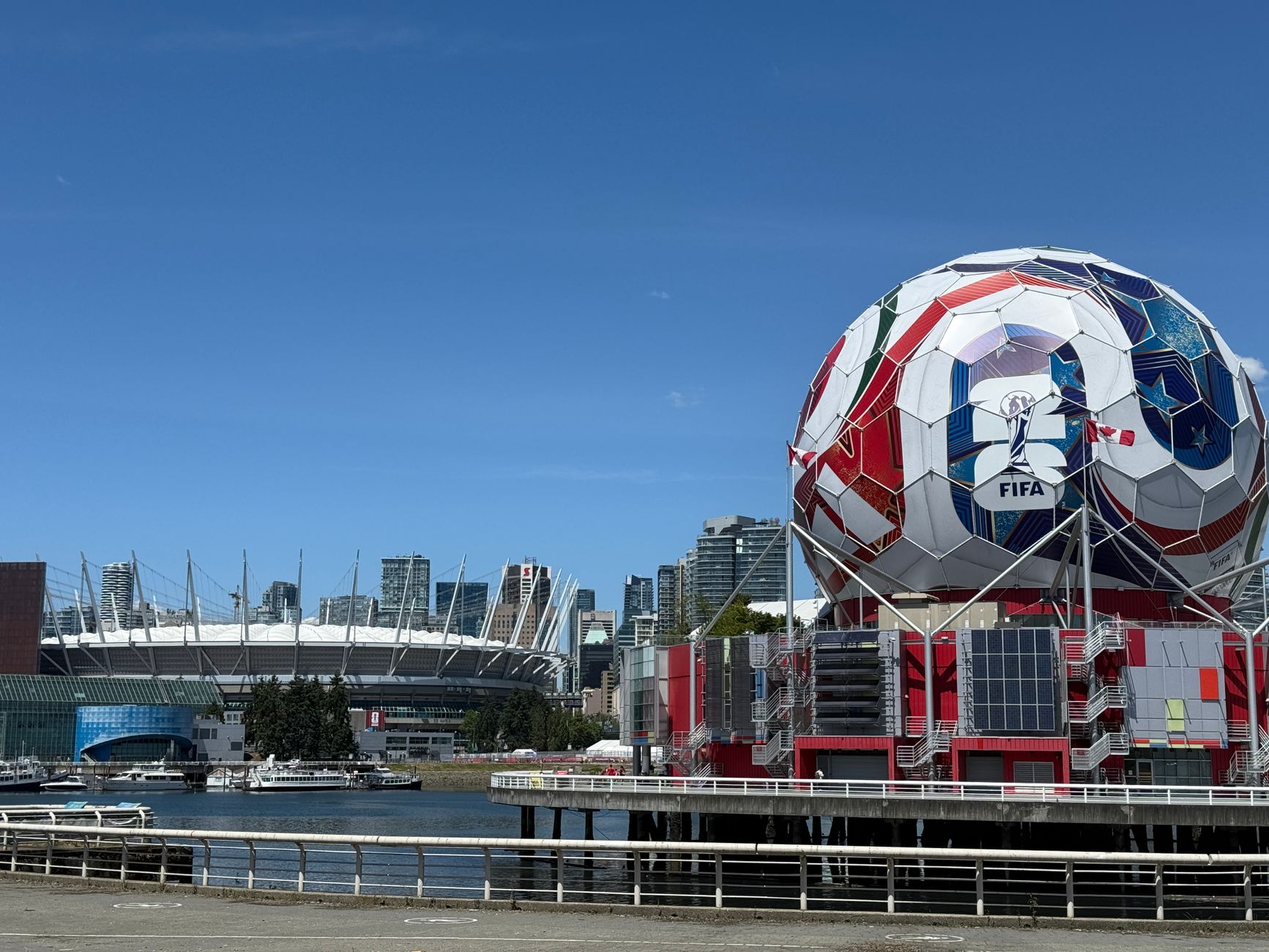
Photo by The Six on Pexels
If you analyze matches: connect tactics with verified numbers
World Cup analysis becomes stronger when tactical observations are connected to measurable events. A team that appears dominant may simply circulate possession in harmless areas, while another may create danger through transitions, set pieces, and fewer but higher-quality chances. Useful indicators include expected goals, progressive passes, high turnovers, field tilt, goalkeeper save percentage, and shots allowed inside the penalty area.
The best analysts also distinguish tournament samples from club samples. A national team may have only a limited number of competitive fixtures under its current coach, and injuries can change the entire structure. Argentina’s 2022 success, for instance, combined Lionel Messi’s chance creation with disciplined midfield support and flexible pressing; looking only at possession would miss much of that story.
A practitioner-level edge is to review lineup continuity. If a team changes its center-back pairing or holding midfielder, its defensive spacing may deteriorate even when the headline players remain available. Likewise, a striker’s goal total can conceal declining shot volume, poor shot locations, or heavy dependence on penalties. These small checks often explain why a popular forecast feels emotionally convincing but performs poorly.
For responsible match research, use Lawrence Berkeley National Laboratory’s guidance on probability and uncertainty as a reminder that forecasts describe likelihood, not destiny. Never treat an algorithm, tipster, or Football Insights article as a guarantee, and never chase a losing result.

Photo by cottonbro studio on Pexels
A disciplined comparison can follow this sequence:
- Evaluate recent opponent strength.
- Measure chance quality rather than possession alone.
- Check set-piece performance at both ends.
- Review substitutions and late-game goals.
- Recalculate after confirmed lineups are announced.
If you want deeper context, explore our [Internal Link: World Cup team tactics and player statistics guide].
Common pitfalls to avoid
The most common World Cup mistakes are confusing historical prestige with current strength, trusting unverified fixture information, and interpreting one knockout match as a complete team assessment. Brazil’s five titles, Germany’s four, and France’s 2018 championship are important historical facts, but they do not automatically predict performance in 2026.
One particularly dangerous error is accepting fabricated certainty. Scam sites often display invented “insider” sources, copied logos, countdown timers, and claims of guaranteed wins. I recognize the pattern because I was burned by one: the page looked polished, the statistics sounded precise, and the withdrawal rules appeared only after money had been deposited. That experience turned every click into a verification exercise.
Check these warning signs before trusting a football platform:
- No identifiable company, ownership, or contact address.
- Missing licensing information for the relevant jurisdiction.
- Guaranteed-win language or pressure to deposit immediately.
- Statistics without match dates, methodology, or source links.
- Withdrawal conditions hidden behind vague promotional terms.
- Requests for unnecessary identity or payment information.
The FIFA World Cup regulations are a stronger reference point for tournament rules than anonymous posts. For gambling-related decisions, consult the regulator that applies where you live, use age-appropriate legal services only, and stop if the activity stops feeling recreational. “No single bet should be viewed as certain,” is the practical principle behind responsible wagering, even when marketing copy suggests otherwise.
The 30-day check-in
A 30-day World Cup check-in is useful because team information changes quickly before a major tournament. Revisit injuries, coaching decisions, roster announcements, qualifying form, venue conditions, and schedule congestion once each week rather than treating an early prediction as permanent. In 2026, the expanded 48-team structure makes this especially important because third-place qualification scenarios can shift after every matchday.
Create a simple record with five columns: source date, confirmed fact, uncertainty, tactical implication, and next review date. This approach separates what is known from what is merely suspected. It also creates a safeguard against hindsight, because you can see whether a conclusion was supported by evidence at the time or quietly rewritten after the result.
My recommended monthly routine is deliberately boring:
- Days 1–7: verify fixtures, groups, and venue information.
- Days 8–14: compare team performances and player availability.
- Days 15–21: review tactical trends and set-piece data.
- Days 22–30: update assumptions, budgets, and risk limits.
Football Insights can help organize daily World Cup coverage, including predictions, player statistics, and tactical notes, but the final judgment should remain yours. The beautiful part of World Cup football is that uncertainty survives even the best spreadsheet. That is not a flaw; it is why the next match still matters.
Ready to follow the tournament with a clearer process?
Frequently Asked Questions
Q: What is the FIFA World Cup?
A: The FIFA World Cup is an international football tournament for national teams organized by FIFA. The first edition took place in Uruguay in 1930, and the 2026 edition will feature 48 teams across Canada, Mexico, and the United States. Brazil has won the competition five times, the most of any country.
Q: How does the 2026 World Cup format work?
A: The 2026 World Cup will use 12 groups of four teams, followed by a round of 32. The top two teams from each group and the eight best third-placed teams will advance. The tournament will contain 104 matches, compared with 64 in the 32-team format used through 2022.
Q: What is the difference between World Cup football and club football?
A: World Cup football is played by national teams, while club football is played by permanent professional clubs. National teams have less training time and fewer shared match repetitions, so coaching systems, player familiarity, and tournament preparation carry unusual importance. Club competitions generally provide longer seasons and more stable tactical structures.
Q: How can I analyze a World Cup match responsibly?
A: Analyze confirmed lineups, recent opponent quality, expected goals, defensive actions, travel conditions, and set-piece performance before forming an opinion. Avoid relying on one statistic or a team’s historical reputation. If betting is legal where you live, set a fixed entertainment budget, never chase losses, and treat every forecast as uncertain.
Q: Why can a World Cup prediction fail?
A: A prediction can fail because football contains low-scoring variance, injuries, refereeing decisions, tactical surprises, and penalty shootouts. Even a strong favorite may create only a narrow statistical advantage in one match. Recheck assumptions after lineup announcements and avoid language such as “guaranteed” or “certain.”
Q: Is Football Insights a betting guarantee service?
A: No, Football Insights provides World Cup-focused analysis, predictions, team tactics, player statistics, and tournament coverage rather than guaranteed outcomes. Football matches cannot be predicted with certainty, and past performance does not ensure future results. Use verified sources, follow applicable laws, and keep sports analysis separate from financial necessity.
Q: What should I check before trusting a World Cup football website?
A: Check the site’s ownership, contact details, publication dates, source links, licensing information, and withdrawal terms before trusting it. Be especially cautious with guaranteed-win claims, urgent deposit requests, copied branding, and statistics lacking methodology. Cross-check fixtures and regulations with FIFA or the relevant national football association.
Follow the next World Cup with curiosity, evidence, and a little healthy suspicion; that combination has saved me more than once, believe it or not — I do.
Thank you for reading.
Football Insights · Editorial Archive